Smartphone battery technology is going through one of the biggest transformations in recent years. After years of slow progress, smartphone brands are now aggressively improving battery capacity, charging speeds, battery lifespan, and energy efficiency.
According to recent industry reports and smartphone trend analysis, 2026 is becoming the year of larger batteries, faster charging systems, and next-generation silicon-carbon battery technology.
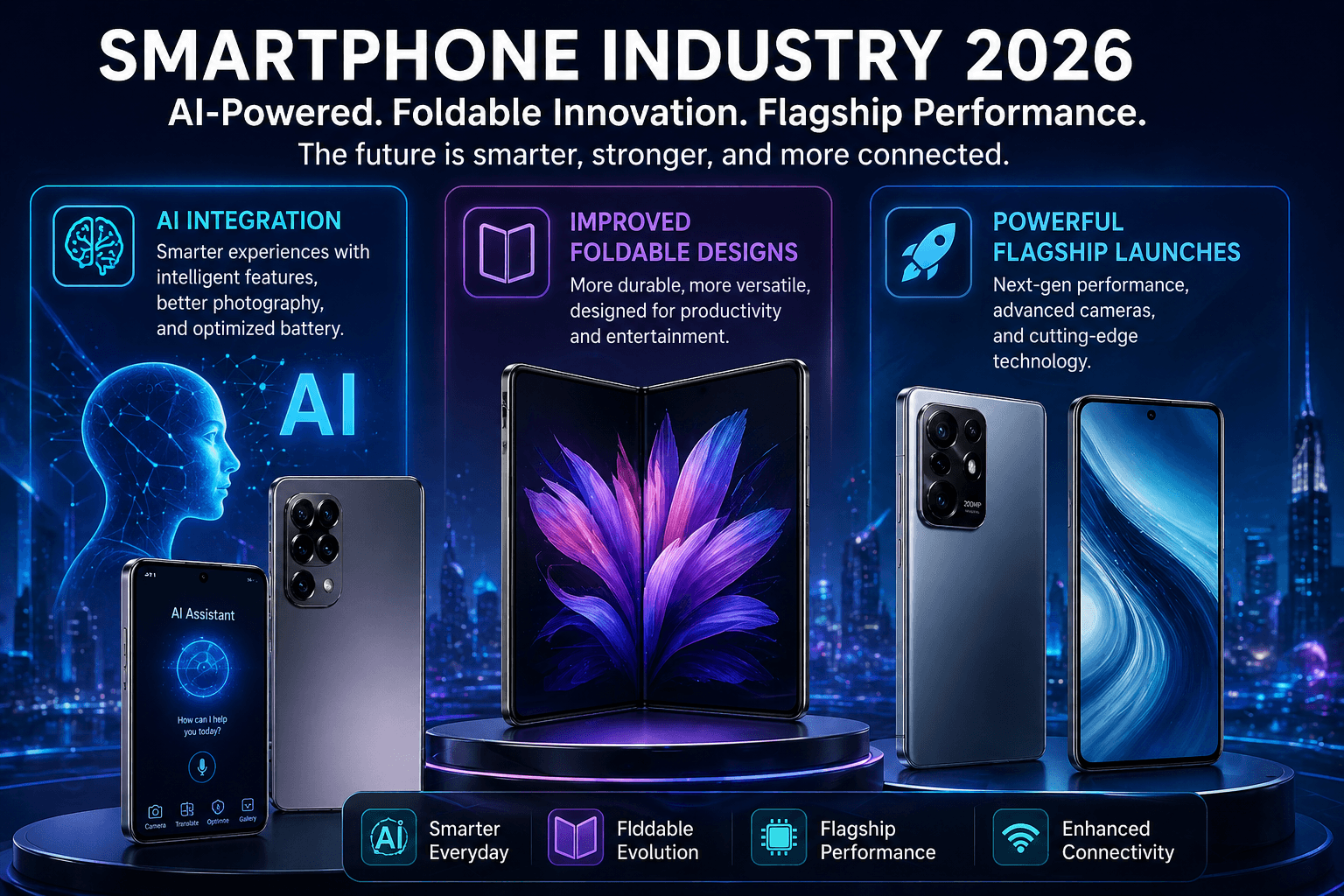
With artificial intelligence features becoming increasingly common on smartphones, battery performance has become more important than ever before. AI tools, real-time processing, high-refresh-rate displays, and advanced camera systems consume significantly more power, forcing manufacturers to rethink how smartphone batteries are designed.
As a result, smartphone brands including Samsung, Xiaomi, OnePlus, Vivo, and OPPO are now focusing heavily on battery innovation.
In this article, we will explore the latest smartphone battery trends, how silicon-carbon batteries work, why charging speeds are improving rapidly, and what users can expect from future smartphones.
Smartphone Batteries Are Finally Improving Again
For many years, smartphone battery innovation remained relatively slow. While processors, cameras, and displays improved rapidly, battery technology evolved at a much slower pace.
Most smartphones continued using traditional lithium-ion battery systems with only minor upgrades.
However, the situation is now changing quickly due to several factors:
- AI-powered smartphones require more energy
- Users demand all-day battery life
- Gaming smartphones consume more power
- Foldable devices need optimized battery systems
- Fast charging competition is increasing
Because of this, smartphone companies are now investing heavily in new battery technologies.
6000mAh Batteries Are Becoming Mainstream
One of the biggest trends in 2026 is the rise of larger battery capacities.
Earlier, most flagship smartphones offered:
- 4000mAh batteries
- 4500mAh batteries
- 5000mAh batteries
Now, many new smartphones are launching with:
- 5500mAh batteries
- 6000mAh batteries
- even larger capacities in gaming devices
This shift is especially noticeable in:
- gaming smartphones
- foldable devices
- AI-focused smartphones
- creator-focused phones
Larger batteries help devices handle:
- AI processing
- high refresh rate displays
- advanced camera systems
- 5G connectivity
- extended gaming sessions
Battery capacity is once again becoming a major selling point for consumers.
What Are Silicon-Carbon Batteries?
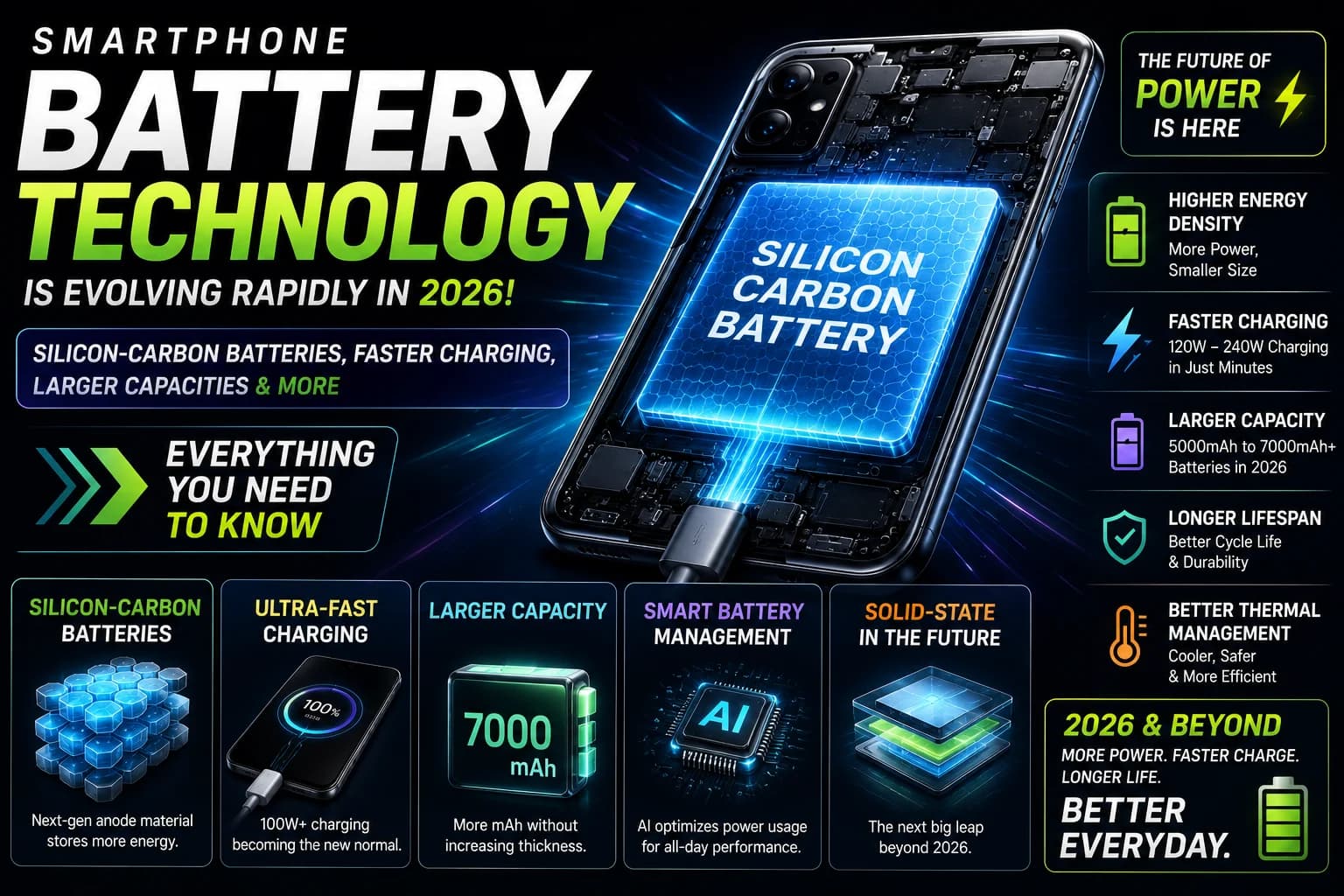
One of the most important innovations in smartphone battery technology is the introduction of silicon-carbon batteries.
Traditional lithium-ion batteries use graphite-based anodes. Silicon-carbon batteries replace part of that graphite with silicon-based materials.
This provides several advantages.
Benefits of Silicon-Carbon Battery Technology
1. Higher Energy Density
Silicon-carbon batteries can store more energy in the same physical space.
This means:
- larger battery capacity
- thinner smartphones
- improved battery efficiency
Manufacturers can either:
increase battery life
or
reduce device thickness
without sacrificing performance.
2. Better Battery Backup
Smartphones with silicon-carbon batteries may deliver significantly longer battery life compared to older lithium-ion systems.
This is particularly important for:
- AI smartphones
- gaming phones
- foldable devices
- content creators
Users increasingly expect all-day battery performance.
3. Faster Charging Support
Silicon-carbon batteries also support higher charging speeds more efficiently.
This helps reduce:
- overheating
- charging stress
- battery degradation
Many flagship smartphones are now competing heavily in charging technology.
Ultra-Fast Charging Is Becoming a Major Trend
Another major industry trend is the rise of ultra-fast charging systems.
Earlier, 18W or 25W charging was considered fast.
Now, smartphone brands are offering:
- 65W charging
- 80W charging
- 120W charging
- even faster experimental charging systems
Companies like Xiaomi and Realme have been aggressively pushing charging technology boundaries.
Some smartphones can now:
- charge from 0 to 50% in under 10 minutes
- fully charge within 20–30 minutes
This dramatically changes how users interact with smartphones daily.
Why AI Smartphones Need Better Batteries
Artificial intelligence is becoming one of the biggest reasons behind battery innovation.
Modern AI features include:
- live translation
- AI photo editing
- AI writing assistance
- voice processing
- contextual automation
- AI search tools
These features require significant processing power.
While newer chipsets are becoming more efficient, AI tasks still increase energy consumption.
This is why smartphone brands are:
- improving battery capacity
- optimizing power management
- using smarter thermal systems
- integrating AI battery optimization
AI-powered battery management systems can now:
- learn usage habits
- reduce background power drain
- optimize app behavior
- extend standby time
Foldable Phones Are Driving Battery Innovation
Foldable smartphones are also accelerating battery development.
Devices like:
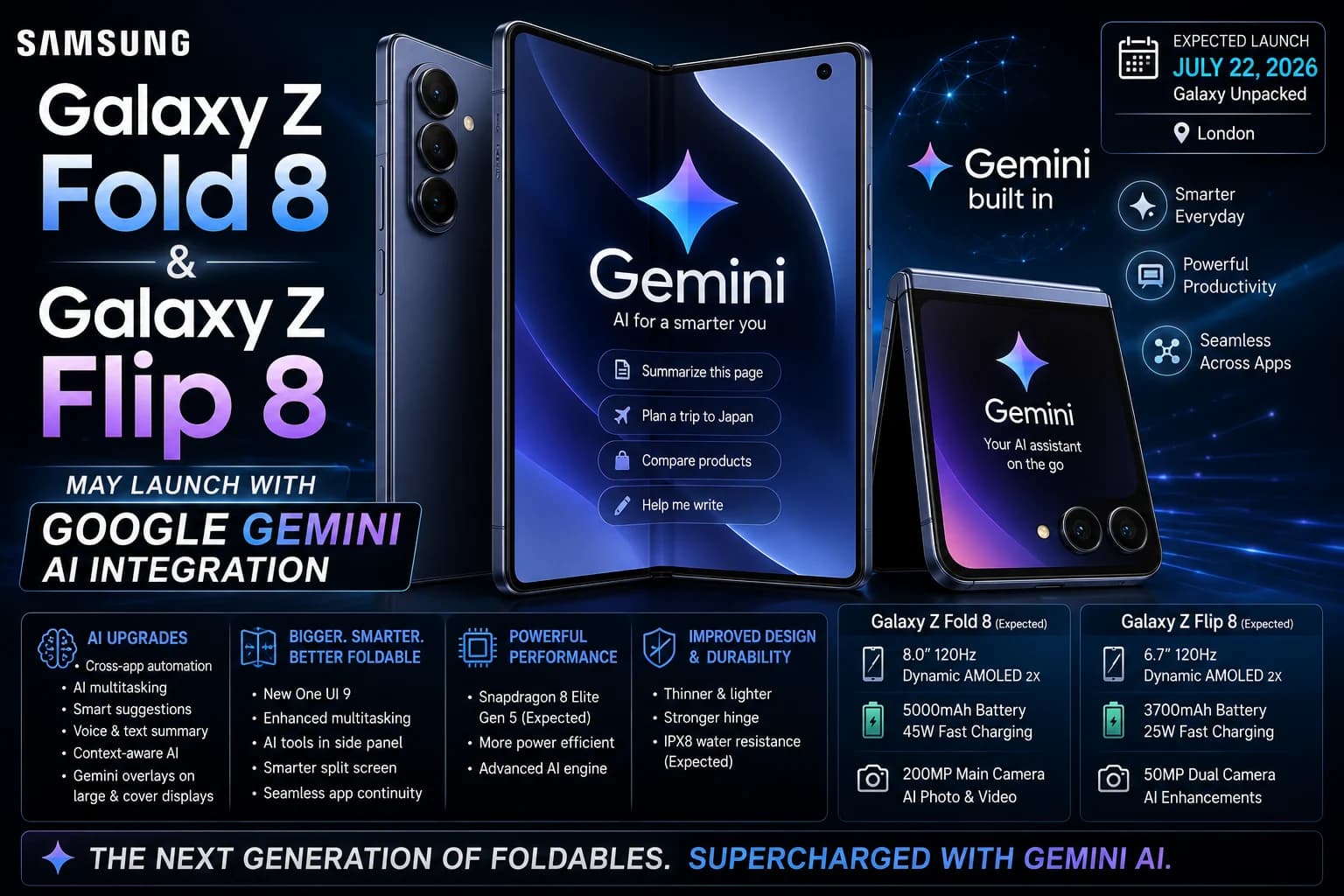
- Samsung Galaxy Z Fold series
- Motorola Razr Fold
- Vivo X Fold series
require more advanced battery systems because:
- they use larger displays
- support multitasking
- consume more power
At the same time, foldables must remain thin and lightweight.
This creates major engineering challenges for battery design.
Battery Lifespan Is Becoming More Important
Consumers are now keeping smartphones longer than before.
Instead of upgrading every year, many users keep devices for:
- 3 years
- 4 years
- even longer
As a result, battery lifespan has become extremely important.
Manufacturers are now focusing on:
- reducing battery degradation
- improving charging cycles
- smarter thermal management
- adaptive charging systems
Some brands now offer:
- battery health protection
- overnight smart charging
- charging limit features
These tools help extend long-term battery performance.
Smartphone Brands Competing in Battery Innovation
The battery race is becoming increasingly competitive.
Here are some brands currently leading innovation:
OnePlus
Known for ultra-fast charging technology.
Xiaomi
Aggressively pushing battery and charging experiments.
Samsung
Focused on safer long-term battery optimization.
Vivo
Combining large batteries with premium camera systems.
Apple
Prioritizing efficiency and battery lifespan optimization.
What Smartphone Users Want Most in 2026
Modern smartphone buyers increasingly prioritize:
- longer battery life
- fast charging
- battery health
- reliable backup
- cooler temperatures
Many users now value battery performance more than raw benchmark scores.
This shift is changing how companies market smartphones.
Future of Smartphone Battery Technology
The future of smartphone batteries looks very promising.
Industry experts expect upcoming innovations such as:
- solid-state batteries
- even faster charging systems
- safer battery chemistry
- AI-powered energy management
- thinner high-capacity batteries
Some future smartphones may eventually deliver:
- multi-day battery life
- ultra-thin designs
- near-instant charging
Battery technology could become one of the biggest smartphone innovation areas over the next few years.
Final Verdict
Smartphone battery technology is evolving rapidly in 2026, driven by AI-powered devices, foldable phones, gaming demands, and user expectations for longer battery life.
The rise of silicon-carbon batteries, larger capacities, and ultra-fast charging systems shows that manufacturers are finally prioritizing battery innovation again.
As smartphone competition intensifies, battery performance may soon become one of the biggest deciding factors for consumers choosing their next device.
For users, this is excellent news. Future smartphones are likely to become:
- faster to charge
- longer lasting
- smarter with power management
- more efficient overall
The smartphone battery revolution has officially begun.
Patel Dipesh