One of the biggest advantages of Apple’s ecosystem has always been its seamless file-sharing experience through AirDrop. For years, Android users have struggled with fragmented and inconsistent file-sharing solutions across different smartphone brands.
That situation may finally be changing.
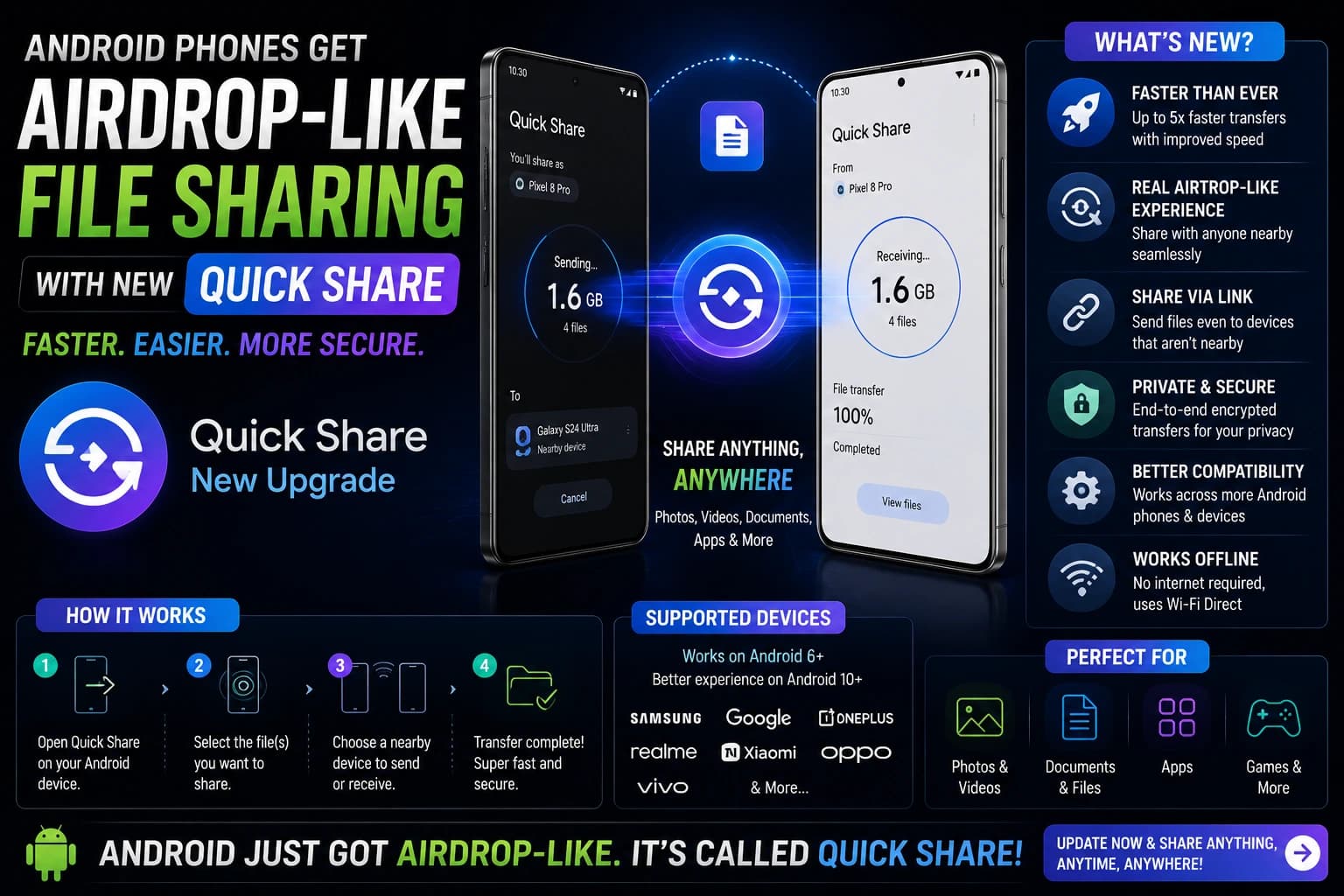
Google is reportedly preparing a major upgrade to Android’s Quick Share system, bringing a much more unified AirDrop-like experience to Android smartphones from brands including:
- Samsung
- OnePlus
- Xiaomi
- Vivo
- OPPO
- Honor
The updated Quick Share platform is expected to improve cross-device compatibility, simplify wireless file transfers, and strengthen the Android ecosystem significantly.
For Android users, this could become one of the most important ecosystem improvements in years.
In this article, we will explain how the new Quick Share system works, why it matters, how it compares to AirDrop, supported devices, and what this means for the future of Android smartphones.
Why AirDrop Became So Popular
Apple’s AirDrop became extremely successful because it solved a simple but frustrating problem:
quick file sharing between nearby devices
AirDrop allows users to instantly transfer:
- photos
- videos
- documents
- files
- links
between Apple devices with minimal setup.
The experience is:
- fast
- reliable
- simple
- deeply integrated into the Apple ecosystem
This seamless functionality became one of Apple’s strongest ecosystem advantages.
Android’s File Sharing Problem
Android smartphones have historically faced ecosystem fragmentation issues.
Different smartphone brands created their own sharing systems:
- Samsung Quick Share
- Xiaomi ShareMe
- Oppo Nearby Share integrations
- third-party transfer apps
This created confusion and compatibility limitations.
Users often experienced:
- inconsistent transfer speeds
- failed connections
- device incompatibility
- complicated setup processes
As a result, Android lacked a truly universal wireless sharing solution comparable to AirDrop.
Google’s New Quick Share Upgrade
Google is now trying to solve this problem by expanding and improving Android Quick Share compatibility.
The new Quick Share system aims to create a more unified Android file-sharing experience across multiple brands and devices.
According to reports, the updated Quick Share platform may support:
- Samsung phones
- OnePlus devices
- Xiaomi smartphones
- Vivo phones
- OPPO devices
- Honor smartphones
This would significantly improve interoperability across the Android ecosystem.
How Quick Share Works
Quick Share uses a combination of:
- Bluetooth
- Wi-Fi Direct
- local wireless connections
to transfer files quickly between nearby devices.
The process is expected to become much more streamlined.
Users may simply:
- Select a file
- Tap Share
- Choose Quick Share
- Select a nearby device
- Transfer instantly
The system is designed to work similarly to AirDrop.
What Makes the New Quick Share Important
The upgraded Quick Share experience could become a major turning point for Android.
For years, Apple’s ecosystem strength came largely from:
- device continuity
- seamless integrations
- effortless sharing
- synchronized experiences
Android devices often offered better hardware flexibility, but weaker ecosystem consistency.
Quick Share may help close that gap.
Better Ecosystem Integration
The new Quick Share update could strengthen Android ecosystem connectivity significantly.
This means users may experience smoother interactions between:
- smartphones
- tablets
- laptops
- foldables
- wearables
Google appears increasingly focused on making Android devices work together more seamlessly.
This strategy becomes especially important as AI-powered ecosystems grow.
Why Ecosystems Matter More in 2026
Modern smartphone competition is no longer only about hardware.
Companies now compete using:
- ecosystems
- AI integration
- cross-device experiences
- cloud connectivity
- smart automation
Apple has dominated ecosystem integration for years.
Now Android brands are aggressively trying to improve their connected experiences.
Quick Share is one of the most important steps in that direction.
AI and Ecosystem Connectivity Are Growing Together
Artificial intelligence is also increasing the importance of ecosystem integration.
Future AI systems may automatically:
- share files between devices
- recommend transfers
- sync workflows
- continue tasks across screens
Google’s Gemini AI ecosystem may eventually integrate deeply with Quick Share features.
For example:
- AI could suggest devices automatically
- prioritize frequently shared contacts
- optimize transfer quality
- recommend smart actions after transfers
This could transform file sharing into a much smarter experience.
Which Phones May Support the New Quick Share?
Reports suggest many modern Android flagship devices may receive support.
Possible supported brands include:
- Samsung
- OnePlus
- Xiaomi
- Vivo
- OPPO
- Honor
Support may depend on:
- Android version
- chipset compatibility
- software updates
- regional availability
Older devices may receive limited functionality.
Foldable Phones Could Benefit the Most
Foldable devices may gain major advantages from improved ecosystem sharing.
Devices like:
- Samsung Galaxy Z Fold series
- OnePlus Open
- Vivo X Fold series
are increasingly used for productivity and multitasking.
Quick Share could help users:
- move files instantly
- continue workflows across devices
- improve productivity
- simplify content transfers
This aligns with the growing AI-powered productivity trend in smartphones.
Security and Privacy Improvements
Wireless file sharing systems must also prioritize security and privacy.
Google is expected to improve:
- permission controls
- device visibility settings
- encryption systems
- spam prevention
Users will likely gain more control over:
- who can discover devices
- who can send files
- temporary visibility options
Privacy improvements are critical for wider adoption.
Android Is Becoming More Ecosystem-Focused
The Quick Share update reflects a larger strategy happening across Android.
Companies are increasingly building:
- connected ecosystems
- AI-powered integrations
- cross-device continuity
- smart productivity tools
This includes:
- Android phones
- Chromebooks
- smartwatches
- tablets
- TVs
- AI assistants
Google is clearly trying to create a more unified Android experience.
Competition Between Android and Apple Is Intensifying
Apple still dominates premium ecosystem integration, but Android brands are rapidly improving.
Android now offers:
- foldable innovation
- faster charging
- AI integration
- wider hardware variety
If Quick Share becomes successful, Android may finally narrow one of Apple’s biggest ecosystem advantages.
This could influence future smartphone buying decisions significantly.
Why This Matters for Smartphone Users
For everyday users, better file sharing means:
- faster workflows
- easier transfers
- improved convenience
- stronger device connectivity
Students, creators, professionals, and businesses could all benefit from smoother Android sharing experiences.
Many users have long requested a true AirDrop competitor for Android.
Quick Share may finally deliver that experience.
Final Verdict
Google’s upgraded Quick Share system could become one of the most important Android ecosystem improvements in recent years.
By bringing AirDrop-like functionality to multiple Android brands, Google is helping reduce fragmentation and improve cross-device compatibility across the Android ecosystem.
As AI-powered smartphones and connected ecosystems become increasingly important, seamless file sharing will play a major role in user experience.
If the rollout succeeds, Android users may finally gain the fast, reliable, and universal wireless sharing experience they have wanted for years.
The Android ecosystem is becoming smarter, more connected, and far more competitive than ever before.
Patel Dipesh